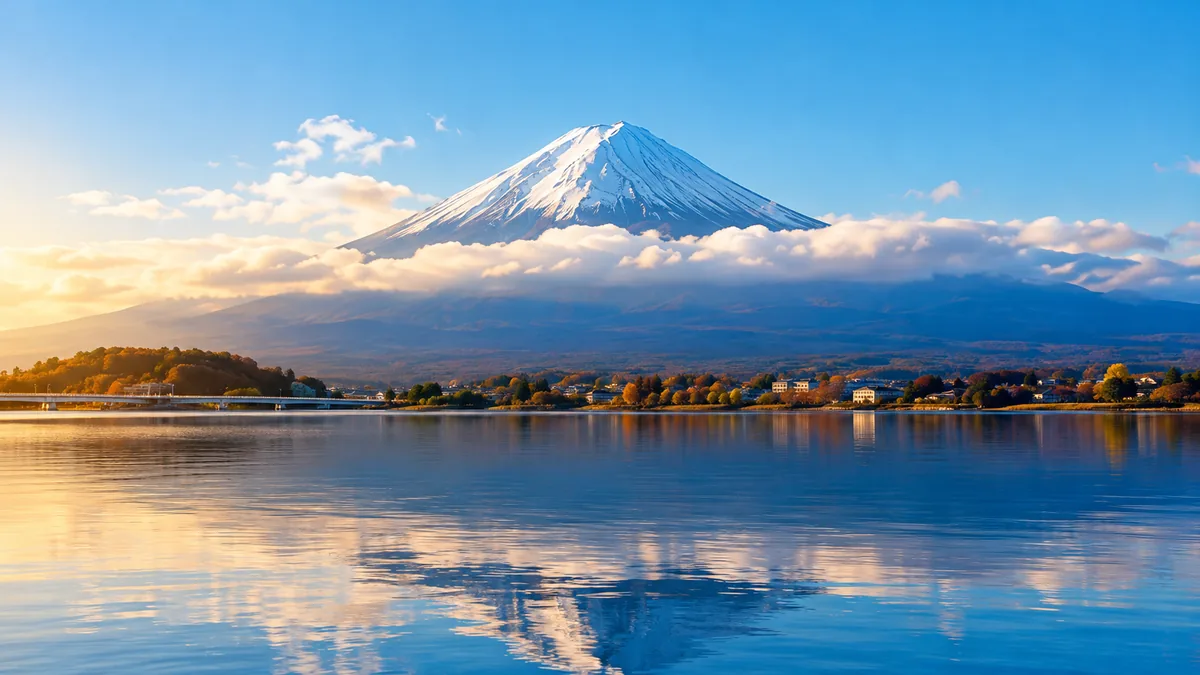
Booking choice: The private Fuji or Hakone tour, from $507 per group. Check dates Tour details
Fuji City, on the Shizuoka side of the mountain, has logged whether Fuji is visible every morning at 8 a.m. for decades. Its 2025 record is the most honest planning tool there is: the whole mountain was visible on 136 days, part of it on 95 more, and nothing at all on 134.
No tour can change those odds. They can only change where you stand and when. Every group listing on this site says the same thing in different words: if cloud hides Fuji, the tour runs and there is no refund.
The quick answer
Go between November and February: in 2025 Fuji was fully visible on about 61 to 79% of mornings in those months, against 7% in June and 10% in August. Mornings are clearer than afternoons, especially from spring to autumn. Check a live camera and a forecast two days ahead, while free cancellation (24 hours before) still applies. A cloudy day means no refund on any tour.
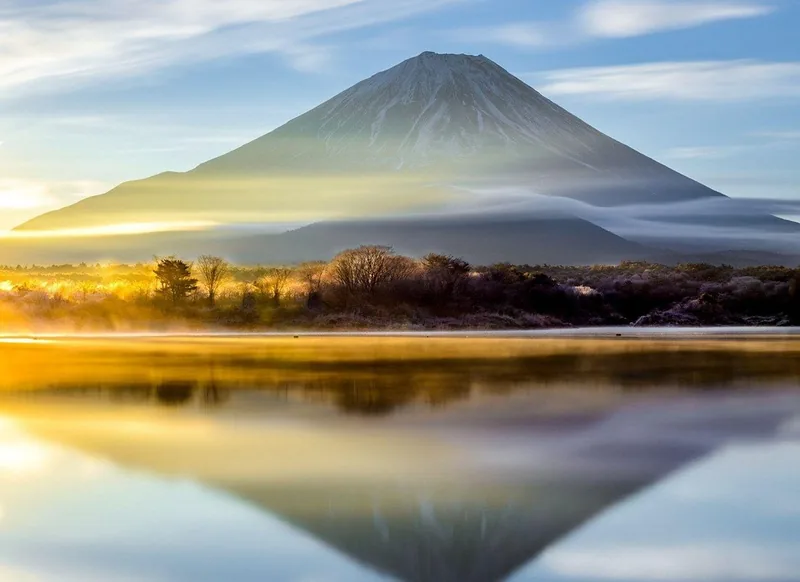
What are the chances of seeing Mt Fuji on a day trip?
About one in three for the whole mountain and two in three for at least part of it, across the year. In 2025 Fuji City saw the full cone on 37% of mornings.
The annual numbers from Fuji City's 2025 observations at 8 a.m.:
- Fully visible: 136 days (37%).
- Partly visible: 95 days. Fuji with a cloud cap, or the lower slopes only.
- Not visible at all: 134 days (37%).
Those averages hide a huge swing by season, which is the part you can use. Guests write about it both ways. “We had a great day out, although cloud meant we didn’t actually see Mount Fuji,” wrote one. Another, on the same tour: “The views were good, but the tour is very weather dependent. We got lucky.”
The tour runs rain or shine, so pick a winter date and give yourself the odds.
Check dates for the Fuji and Hakone bullet train tourWhat is the best month to see Mt Fuji?
February, with Fuji fully visible on 22 of 28 mornings in 2025. November, December and January come close. June to August are the worst.
Fuji City's 2025 counts at 8 a.m., month by month:
| Month | Fully visible | Partly | Hidden | Full view odds |
|---|---|---|---|---|
| January | 19 | 9 | 3 | 61% |
| February | 22 | 4 | 2 | 79% |
| March | 13 | 7 | 11 | 42% |
| April | 9 | 9 | 12 | 30% |
| May | 9 | 10 | 12 | 29% |
| June | 2 | 9 | 19 | 7% |
| July | 5 | 4 | 22 | 16% |
| August | 3 | 8 | 20 | 10% |
| September | 6 | 11 | 13 | 20% |
| October | 10 | 8 | 13 | 32% |
| November | 19 | 9 | 2 | 63% |
| December | 19 | 7 | 5 | 61% |
Source: Fuji City, 2025 Mt Fuji observation record. One year is one year, but the shape repeats: dry, cold air from November to February, then the rainy season in June and hazy, humid summers.
The catch with winter: the 5th Station road often closes from about December to early April, so the clearest months are the ones when coach tours stop lower down. See the 5th Station guide. November is the sweet spot: good odds, the road usually still open, and Hakone's autumn colour.
What time of day is Mt Fuji most visible?
Early morning. Cloud builds on the mountain from mid-morning, and from spring to autumn the afternoons are much worse, especially from the Hakone side.
The forecast site isfujivisible.com scores both sides of the mountain twice a day. Its figures for June 2026 give the Kawaguchiko side 27% in the morning and 10% in the afternoon; from Lake Ashi in Hakone it drops to 13% and 3%. In midwinter the gap closes. Those are its model scores, not observations, but they match what guides say: be at the viewpoint before 9 or 10 a.m.
Look at the order of your tour. Japan Panoramic Tours goes to the 5th Station first, in the late morning, then Hakone after lunch. Gogoday's budget tour does Hakone first and reaches the Fuji lakes in the afternoon. Local Guide Stars ends with the Peace Park in Gotemba. Nobody gets you there at sunrise except a private car that starts early.
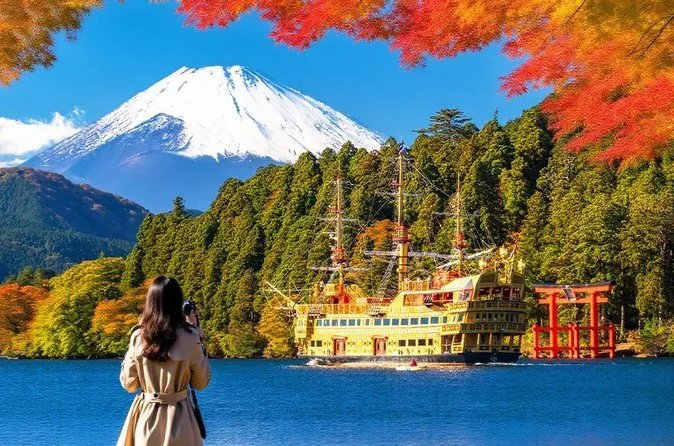
How can I check if Mt Fuji is visible today?
Open a live camera on the morning, and a forecast two to three days ahead. isfujivisible.com and fujigoko.tv both stream cameras from around the lakes.
- Live cameras: isfujivisible.com collects 16 streams, from Lake Kawaguchi, Chureito Pagoda, Lake Yamanaka, Oshino and the Hakone side. Fujigoko.tv, the Fuji Five Lakes site, has its own live camera pages.
- Forecast: isfujivisible.com gives an 8-day outlook with morning and afternoon scores for the north and south sides. Use it to pick the day, then confirm on the cameras.
- Read the weather like a guide: a dry day after rain, with a north wind, is the classic clear day. Humid, hazy heat is the opposite, even with blue sky in Tokyo.
Blue sky over Shinjuku tells you little. Fuji makes its own cloud.
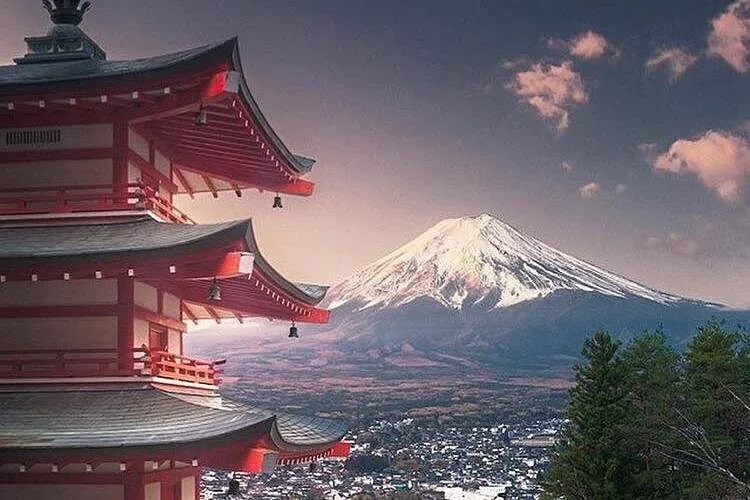
Your own driver-guide who picks the side of the mountain with the clearer sky that morning, from your hotel.
Explore the private Fuji or Hakone tour Tour detailsIs the view different from the 5th Station and from Hakone?
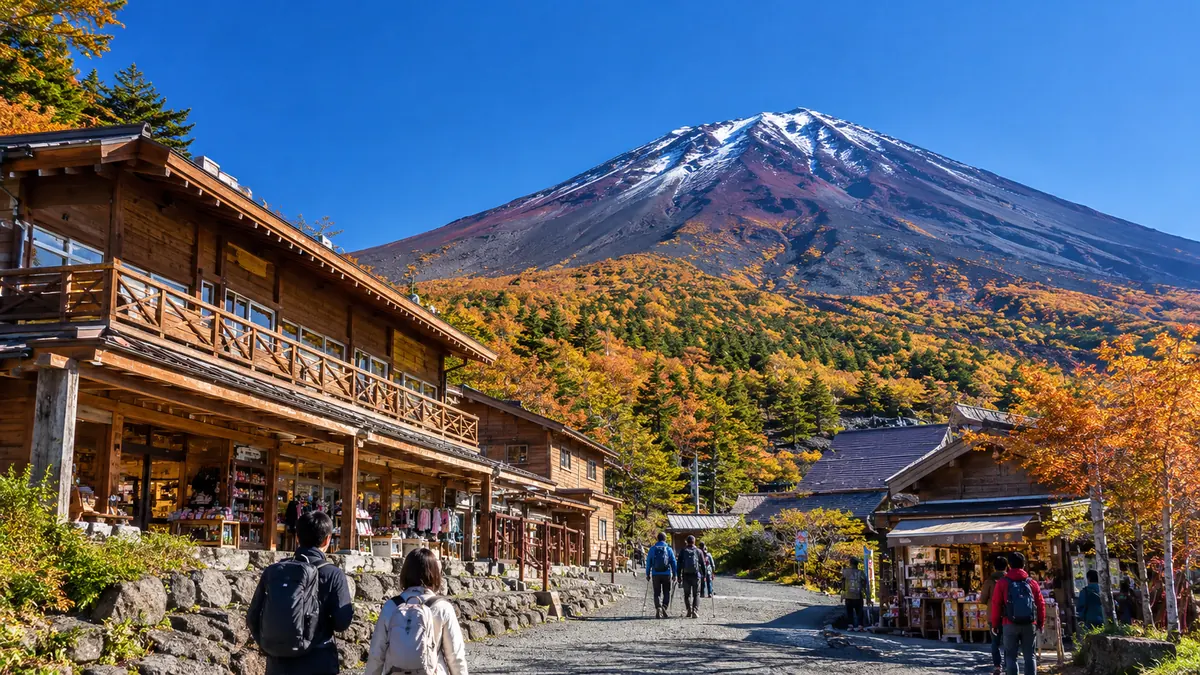
Yes. At the 5th Station you stand on Fuji, 2,305 m up, sometimes above the cloud. From Hakone, about 30 km away, Fuji is a cone on the horizon.
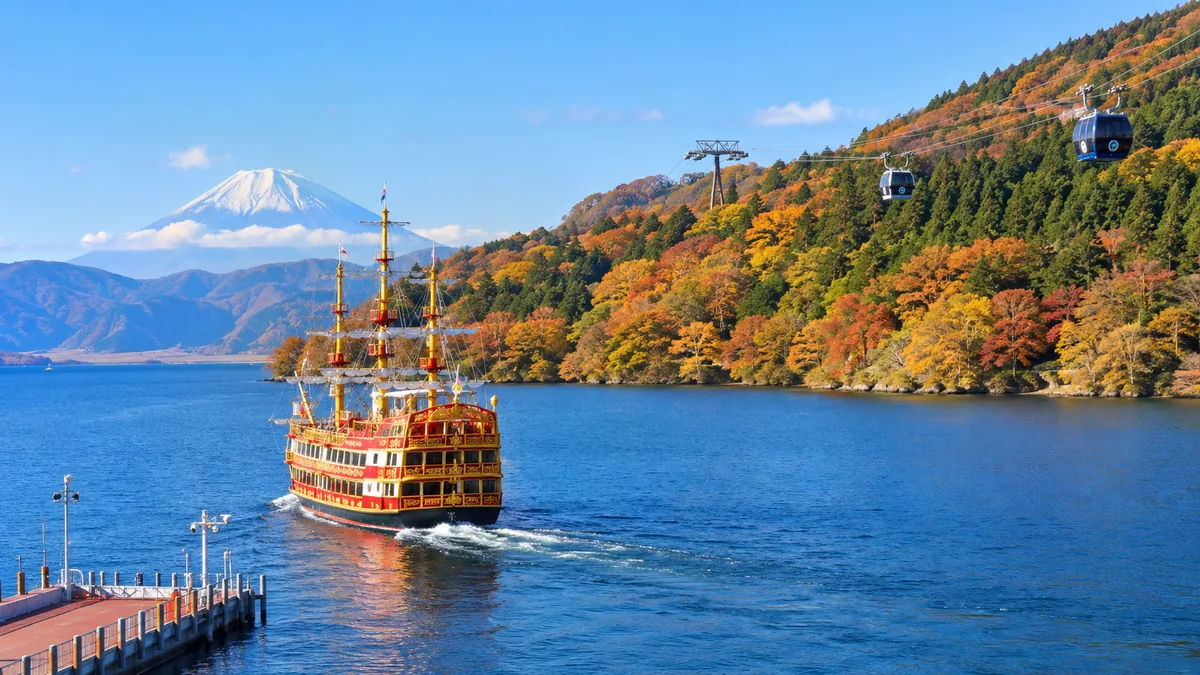
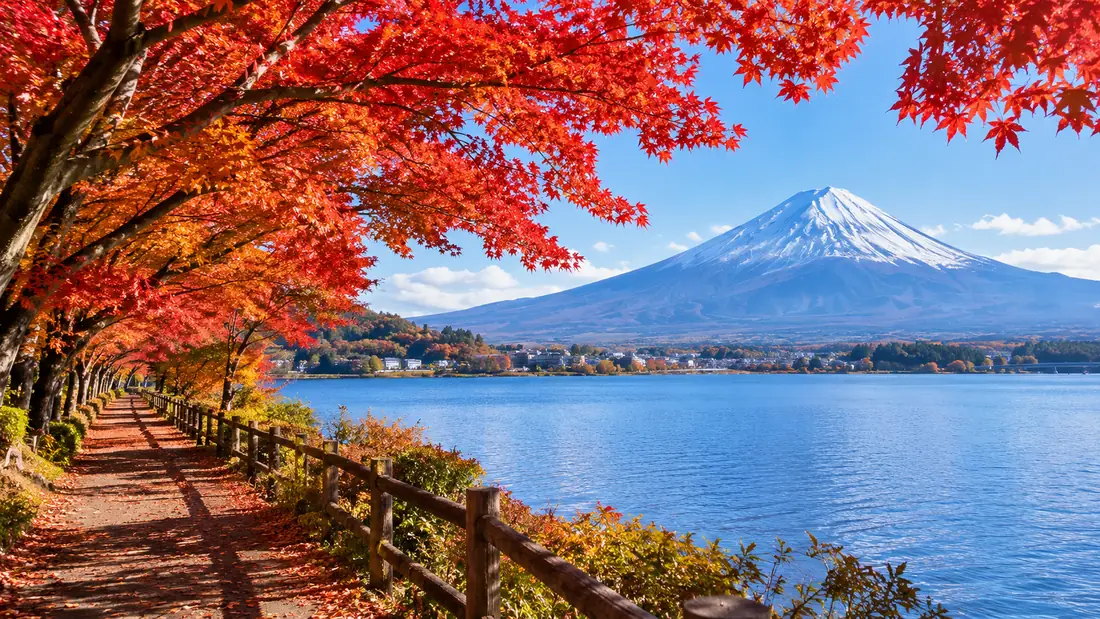
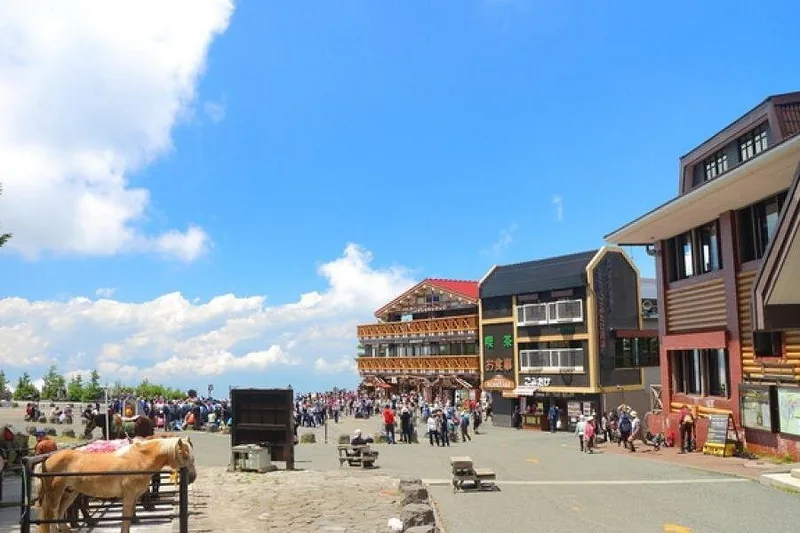
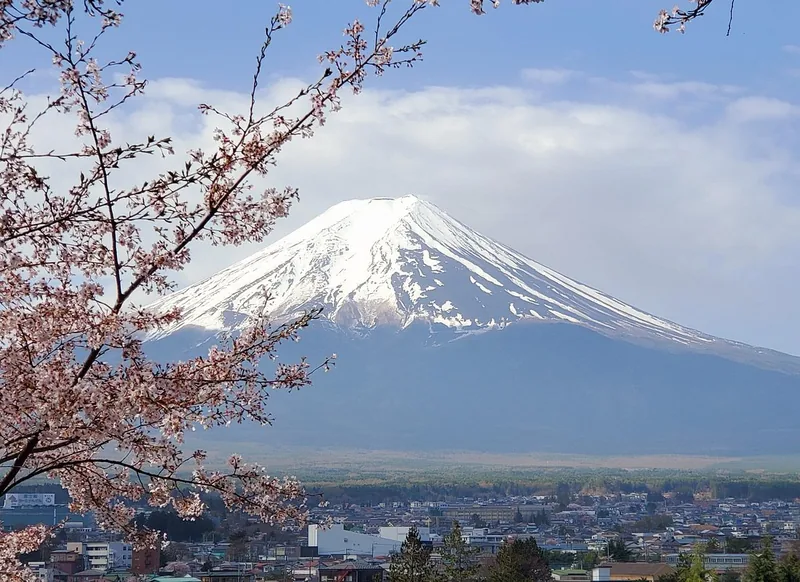
At the Subaru Line 5th Station the summit rises right behind the lodges, and on cloudy days the road can climb through the cloud into sunshine. Or straight into fog: guests describe both. What you don't get up there is the classic postcard shape. That comes from a distance: Lake Kawaguchi and Chureito Pagoda to the north, or Lake Ashi and the ropeway in Hakone to the southeast.
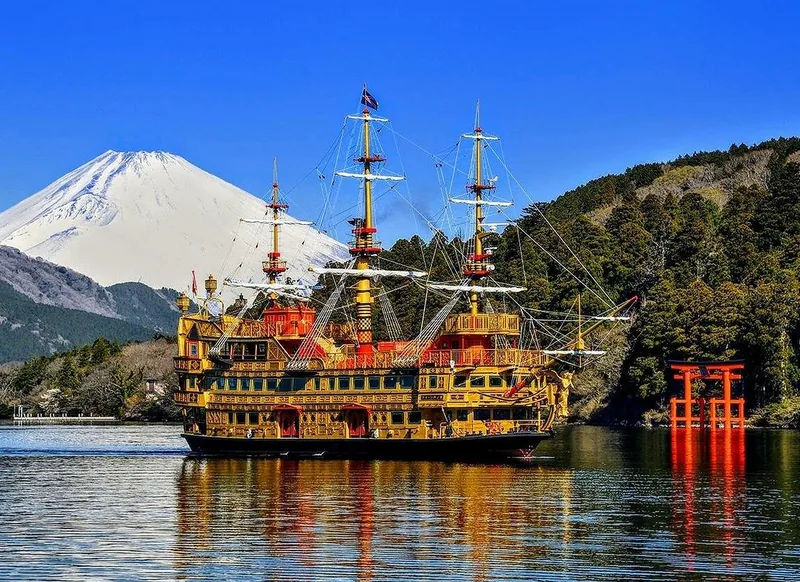
Hakone is a separate area. From the ropeway over Owakudani and from the lake you see Fuji when the air is clear, small and pale. If seeing Fuji is the whole point, put the north side in the day; Hakone or Kawaguchiko compares the two.
What happens on a Mt Fuji tour if it's cloudy?
The tour runs. The guide shortens or swaps stops, and if the ropeway or cruise stops for weather, operators switch to a substitute or refund the ticket part.
JTB's listing is the most direct: “Mt. Fuji may not be visible even from the base. [...] the tour will not be canceled and refunds will not be given for this reason.” When the Subaru Line is closed or the views are hopeless, JTB swaps the 5th Station for the Fujisan Museum, Oishi Park at Lake Kawaguchi, the Fujisan World Heritage Center, the Itchiku Kubota Art Museum or Oshino Hakkai. Other operators drive to “the highest accessible point” or the 1st to 4th Station.
Wind and fog also stop the Hakone Ropeway. Gogoday refunds 1,000 yen per person if it is suspended; Japan Panoramic Tours offers alternatives such as the Swan Lake cruise on Lake Yamanaka, or a gift. A good guide rescues the day: “He made a possibly very sad rainy cloudy day (on the south side of Mt Fuji) into a beautiful sunny bright day on the North side!” wrote a guest of Gogoday.
Can you get a refund if you don't see Mt Fuji?
No. Not one tour refunds for cloud. Your protection is free cancellation up to 24 hours before, so decide with the forecast two days out.
Every tour on this site cancels for a full refund up to 24 hours before the start. That is your weather window. Look at the forecast two or three days ahead; if the outlook is grim, cancel or move the date while it costs nothing. Inside 24 hours, you go or you lose the money.
The private Fuji or Hakone tour goes further in its listing: “Any Negative Review regarding unexpected Bad Weather will Not be Accepted.” Blunt, but fair. Build a spare day into a Tokyo stay if Fuji matters, and book it early in the trip so you can shift it.
Book early in your Tokyo stay and keep the date flexible: free cancellation up to 24 hours before.
Check dates for the Fuji and Hakone bullet train tourWhich Mt Fuji tour gives you the best odds of a view?
A private car that starts early and picks the clearer side of the mountain. On a group tour, choose one that reaches Fuji in the morning.
Private drivers can switch between the Fuji lakes route and Hakone on the morning itself. A guest on Xplor Japan's private tour wrote: “he suggested to start the tour early to we can see perfect view of Mt. Fuji. He is right we seen Mt.Fuji without clouds, amazing.” Another, on the $507 car: “He was knowledgeable of the locations and did his best to find a good view of Mt. Fuji.”
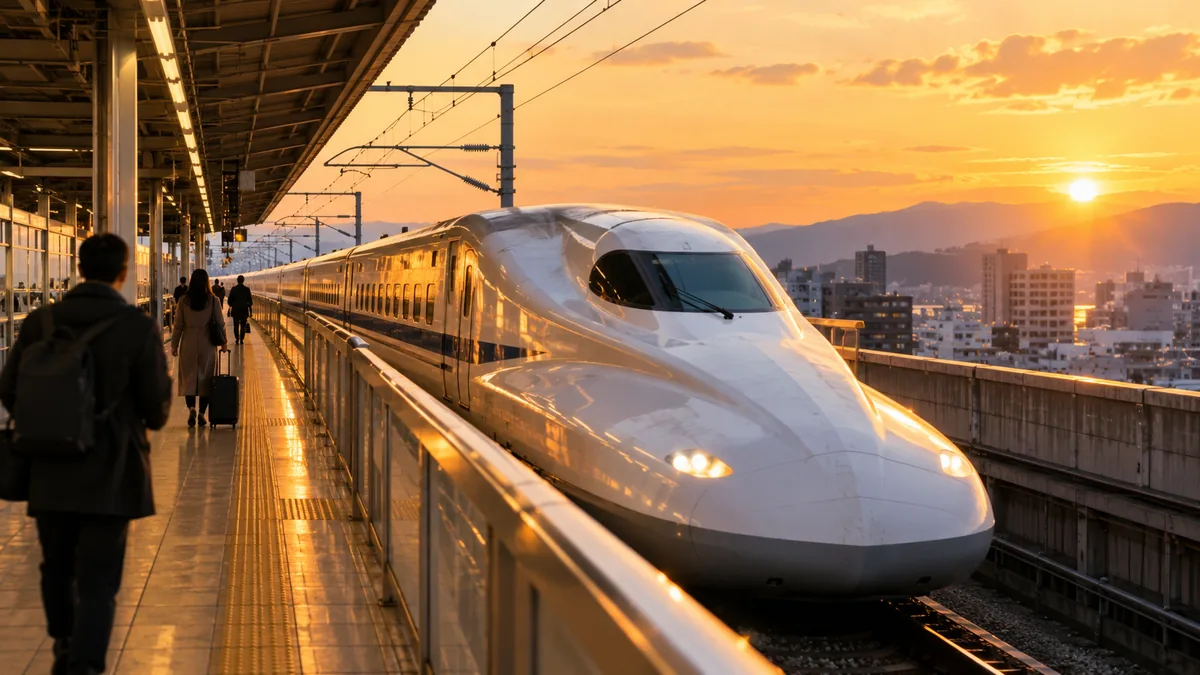
On a coach, the bullet train tour puts the 5th Station before lunch, which is the best a fixed route can do. Whatever you book, choose November to February if your trip allows it. The cost difference between private and group is in private or group tour.
Start at your hotel as early as you like, and let the driver choose Kawaguchiko or Hakone by the sky.
Explore the private Fuji or Hakone tour Tour detailsFrequently asked questions
How many days a year is Mt Fuji visible?
In 2025, Fuji City saw the whole mountain on 136 mornings and part of it on 95 more, at its 8 a.m. check. On 134 days it was completely hidden.
What is the worst month to see Mt Fuji?
June, with the full mountain visible on just 2 of 30 mornings in 2025. July and August are almost as bad: hidden on 71% and 65% of mornings.
Do Mt Fuji tours get cancelled for clouds?
No. Group tours run in cloud and rain and don't refund for a hidden mountain. Operators cancel only when roads or services shut, and then you get a refund or a new date.
Is Mt Fuji visible in the afternoon?
Less often. From spring to autumn, cloud builds from mid-morning, and the Hakone side fares worst in the afternoon. In midwinter afternoons can be just as clear as mornings.
Ready to book
Choose your tour
Free cancellation up to 24 hours before on every option. Prices are from-prices in USD and move with the season.
Private Mt Fuji or Hakone Day Tour by Car
- English-speaking driver-guide
- Private licensed vehicle, hotel to hotel
- Ropeway, cruise and lunch are extra
Mt Fuji & Hakone Day Tour, Bullet Train Back
- English-speaking guide and coach with Wi-Fi
- Hakone Ropeway and Lake Ashi cruise tickets
- Shinkansen Odawara to Tokyo Station
Private Fuji Lakes & Hakone Tour, Shinkansen Back
Chureito Pagoda, Oshino Hakkai and Lake Ashi with your own guide, then a reserved bullet train seat.